
Custom ERP Development
The custom ERP development company for an ERP your team will actually use
BinaryBrill is a custom ERP development company offering ERP software development services to build a custom ERP system, or deliver ERP development for enterprise teams outgrowing spreadsheets. Finance, inventory, procurement and HR in one place, migrated from whatever you're on now without stopping the business — bespoke builds and Odoo customisation, delivered in phases you can cancel between.
A senior engineer replies within 24 hours — not a sales rep.
Why the ERP you have isn't working
The business actually runs on spreadsheets
Purchasing keeps a workbook. Finance keeps a different one. Someone reconciles them on Friday afternoon and nobody fully trusts the result. It worked at thirty people and it's quietly breaking at two hundred — but every attempt to replace it stalls because the spreadsheets contain years of undocumented rules nobody has written down.
You bought an ERP and the team routes around it
The licences are paid for. The modules are switched on. And your operations lead still keeps a shadow tracker because the standard workflow doesn't match how orders really move through your warehouse. An ERP nobody enters accurate data into is worse than no ERP — you now have a system of record that's confidently wrong.
The same order gets keyed in three times
Sales enters it in the CRM, ops re-keys it into inventory, finance re-keys it again to raise the invoice. Every re-key is a chance to transpose a digit, and every discrepancy costs someone an afternoon of tracing which system lied. The cost isn't the licences. It's the salaried hours spent making disconnected systems agree.
Nobody can answer a simple question quickly
What's our real margin on this product line? How much stock is committed versus available? Which supplier is consistently late? These should take seconds. Instead they take a data pull, a manual join in Excel and a caveat about how the numbers might be a week stale.
How we approach custom ERP development
ERP projects rarely fail on code. They fail because the rollout ignored the people who have to change how they work on go-live day. We plan for that first and build second.
We map your operations before we design anything
The first phase is spent with the people doing the work — the warehouse supervisor, the AP clerk, the buyer. We document how the process actually runs, including the exceptions and workarounds that never made it into any policy document. Those exceptions are where ERP implementations die, so we find them while changing the design is still free.
Phased rollout, never big-bang
We sequence modules so each one delivers something usable on its own and the business keeps running throughout. Typically one department or one site goes live first, we fix what the real world exposes, then we roll forward. If phase two never happens, phase one still has to have been worth doing — we design to that standard.
Data migration treated as its own project
Legacy data is messy: duplicate suppliers, part numbers with inconsistent formats, opening balances that don't tie out. We profile it early, agree cleansing rules with your finance and ops leads, and run repeated trial migrations into a staging environment so you see exactly what lands before anything is irreversible.
Bespoke build or Odoo — whichever is honestly cheaper
If eighty percent of what you need is standard, customising Odoo gets you there faster and costs less to maintain than a system built from scratch. If your competitive edge lives in a process no package models well, a bespoke build is the right call. We'll tell you which one your situation is, including when the answer means less work for us.
The stack we build on
Chosen to fit the problem — not because it's what we used last time.
ERP platforms & frameworks
- Odoo
- ERPNext
- Frappe Framework
- Django
- Laravel
- Spring Boot
- .NET
Data & reporting
- PostgreSQL
- MySQL
- SQL Server
- Redis
- Metabase
- Apache Superset
- Power BI
Integration
- REST APIs
- GraphQL
- RabbitMQ
- Apache Kafka
- Celery
- EDI
- Webhooks
Infrastructure & operations
- Docker
- Kubernetes
- AWS
- Azure
- Terraform
- GitHub Actions
- Grafana
How we'll work together
Every stage ends with something in your hands — not a status update.
- 01
Operations discovery
We sit with each function that will touch the system and document the real process — the approvals, the exceptions, the reports people actually rely on. We also profile your existing data so surprises surface now rather than during migration weekend.
You get: A process and data map, a module scope with priorities, and a phased rollout plan with a fixed price for phase one.
- 02
Core build and configuration
We stand up the first modules against your real data in a staging environment. Your process owners get hands on it every sprint, which is how we catch the mismatch between what someone described in a workshop and what they actually do.
You get: A working staging system loaded with your migrated data, sprint demos, and a written list of process decisions made along the way.
- 03
Migration rehearsal and go-live
We run the full migration repeatedly until reconciliation is clean and your finance lead signs off on the balances. Go-live for the first phase happens on a planned cutover with a documented rollback path, and we're on hand through the first close.
You get: Reconciled migrated data, a signed cutover runbook with rollback steps, and the first phase live in production.
- 04
Adoption, then the next phase
We train by role rather than by module, because the AP clerk doesn't need the whole system explained. We watch what people struggle with in the first weeks and adjust the build — then start the next phase with what we learned.
You get: Role-based training materials, a hypercare support period, and a revised plan for the following phase.
Where we've applied this
Manufacturing
Bills of materials, work orders and shop-floor consumption tied to real stock levels, so production planning stops running on a supervisor's memory.
Logistics & distribution
Multi-warehouse inventory with landed cost, batch and serial traceability, and dispatch that reflects what is actually on the shelf right now.
Retail & wholesale
Purchasing, pricing tiers and stock across channels reconciled in one ledger, so an online sale and a counter sale don't tell finance two different stories.
Healthcare
Consumables and equipment tracked with expiry and lot control, and procurement approvals that leave the audit trail a regulator will ask for.
Construction & real estate
Project costing that compares committed spend against budget per job, with subcontractor billing and retention handled in the same system as the ledger.
Professional services
Timesheets, utilisation and project profitability connected to invoicing, so partners can see which engagements make money before the quarter closes.
Clients we've built for
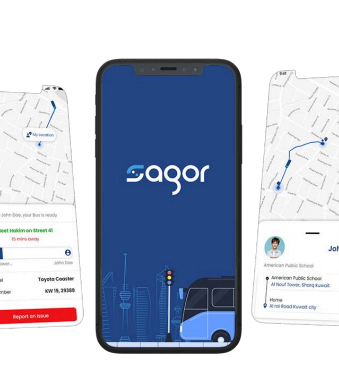
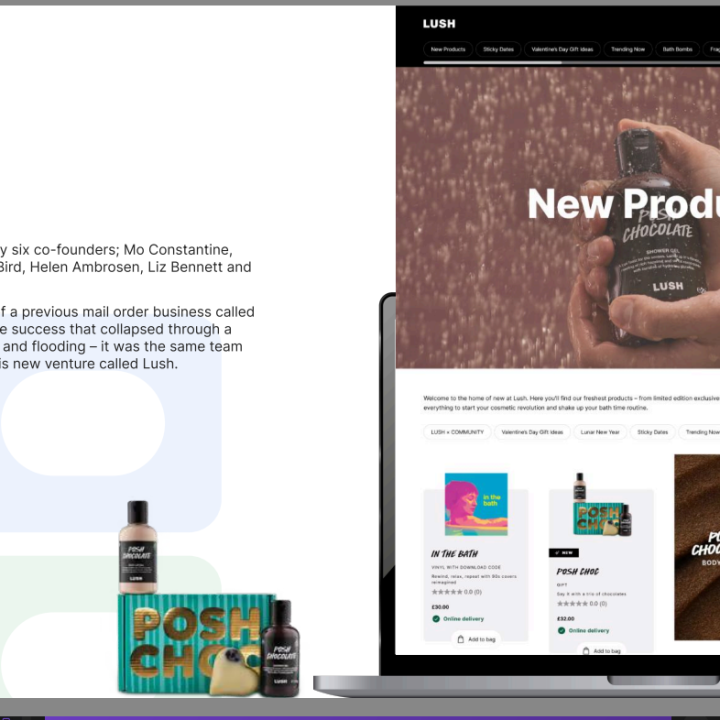
Real products, in production, with real users on them.
Questions buyers ask us
What drives the cost of an ERP project?
Three things, roughly in order: how many distinct processes need modelling, how bad the legacy data is, and how many external systems have to stay in sync. Module count matters less than people assume — a single module with fifteen approval variations costs more than four straightforward ones. After discovery we can price phase one firmly and give you an informed range for what follows.
How long before we're live on something?
First phase in production usually lands in a few months, not a year, because we deliberately scope it to one department or site. The full programme takes longer and that's fine — the point of phasing is that you're getting value while the rest is still being built, and you can stop between phases if priorities change.
Should we customise Odoo or build from scratch?
Start with Odoo or ERPNext if your processes are close to standard practice; you inherit accounting, inventory and procurement that already work and you only pay for the differences. Build bespoke when a core process is genuinely unusual and forcing it into a package would mean customisation so deep that upgrades become painful. We assess this in discovery and we've talked clients out of bespoke builds before.
What actually makes ERP projects fail?
Change management, far more often than engineering. The system works and people don't use it, because nobody involved the process owners early, training was a single session three days before go-live, or the design encoded how management thinks the process runs rather than how it runs. We front-load discovery with the people doing the work and run a hypercare period after each phase for exactly this reason.
Can it talk to the systems we're keeping?
Yes, and you should keep the ones that are working. We integrate with existing CRMs, payroll, e-commerce platforms, banking feeds and warehouse hardware via APIs, message queues or file exchange where that's all a vendor offers. We'd rather integrate a system your team likes than replace it for the sake of tidiness.
What happens to our old data and who owns the result?
Your legacy data gets profiled, cleansed against rules you approve, and migrated with a reconciliation report your finance lead signs off. You own the code, the database and the deployment pipeline outright from day one — including customisations built on top of Odoo. If you want to run it in-house afterwards, we hand over documentation and help your team take it on.
Tell us how your operations actually run
Send us a paragraph about where the spreadsheets and the workarounds are. A senior engineer replies within one business day, and the first call is a working conversation about scope and sequencing — not a licence pitch.